

Clinical Advisory Board
Autoimmune Pulmonary Alveolar Proteinosis Board
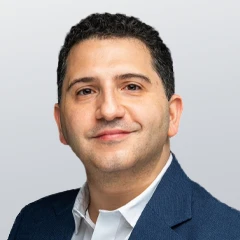
Dr. Ali Ataya is Professor of Medicine and Director of the Pulmonary Vascular Disease Center and Rare Lung Disease Program at the University of Florida in Gainesville. He is board-certified in Pulmonary, Critical Care, and Internal Medicine with clinical and research interests focused on pulmonary vascular diseases, and rare lung disorders including lymphangioleiomyomatosis (LAM), autoimmune pulmonary alveolar proteinosis (autoimmune PAP), and Hereditary Hemorrhagic Telangiectasia (HHT).
Dr. Ataya received his medical degree from the Royal College of Surgeons in Ireland (RCSI). He completed residency training in Internal Medicine at the Cleveland Clinic, followed by fellowship training in Pulmonary and Critical Care Medicine at the University of Florida, where he subsequently joined the faculty. Throughout his career, he has been involved in the development of multidisciplinary clinical programs and Centers of Excellence dedicated to the care of patients with rare and complex pulmonary diseases.
As a clinician-scientist, Dr. Ataya's research focuses on the pathogenesis, diagnosis, and treatment of rare pulmonary diseases. He has served as Principal Investigator for numerous industry-sponsored and investigator-initiated clinical trials evaluating novel therapies for pulmonary vascular and rare lung diseases. His work has contributed to advancing the understanding of disease mechanisms, improving diagnostic approaches, and expanding therapeutic options for patients with uncommon respiratory conditions.
Dr. Ataya works closely with patient advocacy organizations and professional societies dedicated to pulmonary vascular disease and rare lung disorders. His career reflects a sustained commitment to advancing patient care through clinical innovation, collaborative research, medical education, and advocacy for patients living with rare and complex respiratory disorders.

Dr. Francesco Bonella is Professor of Medicine and Head of the Center for Interstitial and Rare Lung Disease at the Ruhrlandklinik University Hospital in Essen, Germany. His research spans sarcoidosis, idiopathic pulmonary fibrosis (IPF), autoimmune interstitial lung disease, and pulmonary alveolar proteinosis (PAP) with a particular focus on biomarkers, genetic predisposition, and applications of bronchoalveolar lavage. He has served as an investigator on major clinical trials in IPF, sarcoidosis and PAP.
Dr. Bonella sits on the editorial boards of the European Respiratory Journal and Chest, serves as an Associate Editor of Respirology, and is Editor in Chief of Current Opinion in Pulmonary Medicine. He has been actively involved with the European Respiratory Society (ERS) since 2014 and currently serves on the American Thoracic Society (ATS) Program Committee. In 2010, he founded EuPAPNet, the European Network for pulmonary alveolar proteinosis, and he currently coordinates the Sarcoidosis Core Network within the European Reference Network ERN-LUNG.
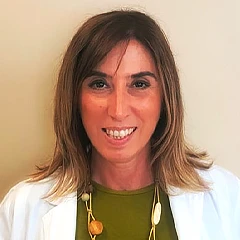
Dr. Ilaria Campo is a Senior Biologist (Consultant Level) in the Pathology and Molecular Genetics Unit and Pneumology Unit at Fondazione IRCCS Policlinico San Matteo, Pavia, Italy. With more than 20 years of experience in molecular genetics, rare respiratory diseases, and translational clinical research, Dr. Campo has developed internationally recognized expertise in the genetic and molecular characterization of interstitial lung diseases (ILDs), with a particular focus on Pulmonary Alveolar Proteinosis (PAP) and Idiopathic Pulmonary Fibrosis (IPF).
After earning a Ph.D. in Genetic and Biomolecular Sciences and a Specialization in Clinical Pathology and Clinical Biochemistry from the University of Pavia, Dr. Campo established a research program focused on integrating molecular diagnostics and precision medicine into the clinical management of rare lung diseases. She serves as an Expert Member of the ClinGen Consortium-Pulmonary Working Group and is a member of the Genetic Working Group of ERN-LUNG (European Reference Network for Rare Respiratory Diseases). She also serves on the Technical-Scientific Committee of Fondazione IRCCS Policlinico San Matteo and as Secretary of the it’s Working Group on Research Integrity. Dr. Campo co-founded EuPAPNet, the European Network for Alveolar Proteinosis and contributed to the European Respiratory Society Clinical Practice Guidelines on Pulmonary Alveolar Proteinosis. She has extensive experience in multicenter clinical trials, including the IMPALA and IMPALA-2 clinical trials evaluating inhaled molgramostim in autoimmune PAP and currently leads the Italian National Registry of Pulmonary Alveolar Proteinosis.

Dr. Yoshikazu Inoue is an internationally recognized clinician-scientist specializing in interstitial lung diseases, with particular expertise in pulmonary fibrosis and rare lung diseases, including pulmonary alveolar proteinosis (PAP) and lymphangioleiomyomatosis (LAM). A former President of the Fleischner Society, he has contributed extensively to international clinical practice guidelines and consensus statements on interstitial lung diseases published by the American Thoracic Society (ATS), European Respiratory Society (ERS), and Japanese Respiratory Society (JRS).
He previously served as Executive Director of the Clinical Research Center at NHO Kinki Chuo Chest Medical Center (KCCMC), one of Japan’s leading centers for respiratory medicine and research, and as Invited Professor at Osaka University Graduate School of Medicine. Dr. Inoue currently serves as a Visiting Researcher at KCCMC’s Clinical Research Center and as an Advisor to the Osaka Anti-Tuberculosis Association, Osaka Fukujuji Hospital. After completing his clinical and research training at Ehime University, he studied the mechanisms of pulmonary fibrosis in granulomatous lung diseases at the National Jewish Center for Immunology and Respiratory Medicine in Denver, Colorado. Since returning to Japan, he has led clinical and translational research in PAP, LAM, interstitial lung diseases, and pulmonary fibrosis.
Dr. Inoue has played a central role in numerous international multicenter clinical trials, serving as principal investigator, coordinating investigator, and scientific advisor in the development of novel diagnostic approaches and therapeutic strategies for PAP and LAM, including inhaled recombinant GM-CSF therapy, sirolimus, and antifibrotic treatments. He has also contributed to the NIH-funded Rare Lung Diseases Consortium and served on numerous international and domestic scientific committees.
Dr. Inoue has held numerous leadership positions at JRS, ATS, ERS, the Asian Pacific Society of Respirology, the World Association for Sarcoidosis and Other Granulomatous Disorders, the Japanese Society of Sarcoidosis and Other Granulomatous Disorders, and the Japanese Medical Society for Lung Surfactant and Biological Interface, and serves as the advisors to PAP, LAM, and interstitial lung disease patient advocacy organizations in Japan and the United States.

Dr. Maria Kokosi is a Consultant Respiratory Physician at Royal Brompton Hospital and Honorary Clinical Lecturer at Imperial College London and holds internationally recognized expertise in interstitial lung diseases (ILDs) and rare respiratory disorders. She leads the Rare Cystic Lung Disease Service within the National Cystic Lung Disease Rare Disease Collaborative Network (RDCN) and chairs the associated national Multidisciplinary Team (MDT) meeting. She also leads the Pulmonary Alveolar Proteinosis (PAP) Service at Royal Brompton Hospital, a national referral centre providing specialist care for patients from across the UK.
Dr. Kokosi completed specialist training in Respiratory Medicine in Greece then moved to the U.S. for a research fellowship at the Medical University of South Carolina. She subsequently joined the Royal Brompton Hospital as a Clinical Research Fellow and was ultimately appointed Consultant Respiratory Physician. Her clinical and academic interests focus on ILDs, with particular expertise in rare conditions including cystic lung diseases and pulmonary alveolar proteinosis. She is actively involved in translational research and clinical trials, serving as Principal Investigator for studies investigating novel therapies in interstitial and rare respiratory diseases. She is also Co-Lead of the LifeArc Centre for Rare Respiratory Diseases.
Dr. Kokosi has authored more than 80 peer-reviewed publications and contributes to international respiratory medicine through her engagement with the European Respiratory Society (ERS). She previously served on the ERS Pulmonary Alveolar Proteinosis Guideline Committee and is currently a member of the ERS HERMES Examination Committee for Adult Respiratory Medicine.
She is committed to providing high-quality, patient-centred care and advancing the understanding and treatment of rare lung diseases.
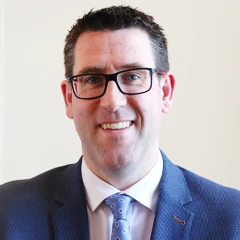
Dr. Cormac McCarthy is a Consultant Respiratory Physician at St Vincent’s University Hospital and Associate Professor of Medicine at University College Dublin (UCD), where he is Director of the UCD Lung Centre and Director of the Academic Centre for Rare Diseases. He also serves as Co-Clinical Lead of the National Rare Disease Office and as Vice Coordinator of the ERN-LUNG (European Commission), his two most recent appointments, and has held a number of earlier academic and clinical appointments over the course of his career. Dr. McCarthy’s clinical and translational research focuses on interstitial lung diseases, pulmonary alveolar proteinosis (PAP), and diffuse cystic lung diseases, with a particular emphasis on biomarker discovery, disease mechanisms, and translational therapeutics. His work bridges mechanistic science with clinical research and clinical trials to advance diagnostics, treatment strategies, and patient outcomes in rare and complex respiratory diseases.
Dr. McCarthy serves on the editorial boards of several respiratory journals, including as Co-Chief Editor of Seminars in Respiratory and Critical Care Medicine, Associate Editor of Respirology and of Breathe (European Respiratory Journal).

Dr. Bruce Trapnell is Professor of Medicine and Pediatrics at the University of Cincinnati, Director of the Translational Pulmonary Science Center at Cincinnati Children’s Hospital Medical Center (CCHMC), Co-Director of the Rare Lung Diseases Clinical Research Consortium (RLDC), and Scientific Director of the Pulmonary Alveolar Proteinosis Foundation. He trained in biochemistry, genetics, general medicine, internal medicine, and pulmonary medicine before serving as Senior Investigator and Attending Physician at the National Institutes of Health (NIH). He then joined Genetic Therapy Inc./Novartis Pharma, where he established the Division of Virology and Pulmonary Studies and served as its Director and Vice President. After relocating to Cincinnati in 1997, his research has focused on developing pathogenesis-based diagnostics and therapeutics for rare lung diseases including cystic fibrosis (CF), alpha-1 antitrypsin deficiency (AATD), lymphangioleiomyomatosis (LAM), and pulmonary alveolar proteinosis (PAP), among others.
Dr. Trapnell established and directed the Cystic Fibrosis Therapeutics Development Network Center at CCHMC, leading clinical trials that resulted in FDA-approval of Creon® and Pancreaze® for CF patients. He co-founded and directed the Rare Lung Diseases Consortium and contributed to the RLDC-based MILES clinical trial, which led to FDA approval of Sirolimus® as a therapy for LAM. His group helped determine the pathogenesis of autoimmune PAP, developed a highly accurate blood-based diagnostic test for the disease, and served as international coordinating investigator on the IMPALA and IMPALA-2 clinical trials evaluating molgramostim therapy for autoimmune PAP. Dr. Trapnell also co-founded the PAP Foundation and partnered with the National Organization of Rare Diseases (NORD) to co-host an Externally-Led Patient-Focused Drug Development meeting bringing the autoimmune PAP patient voice directly to the FDA.
Interested in learning more about autoimmune PAP?
What is autoimmune PAP?